






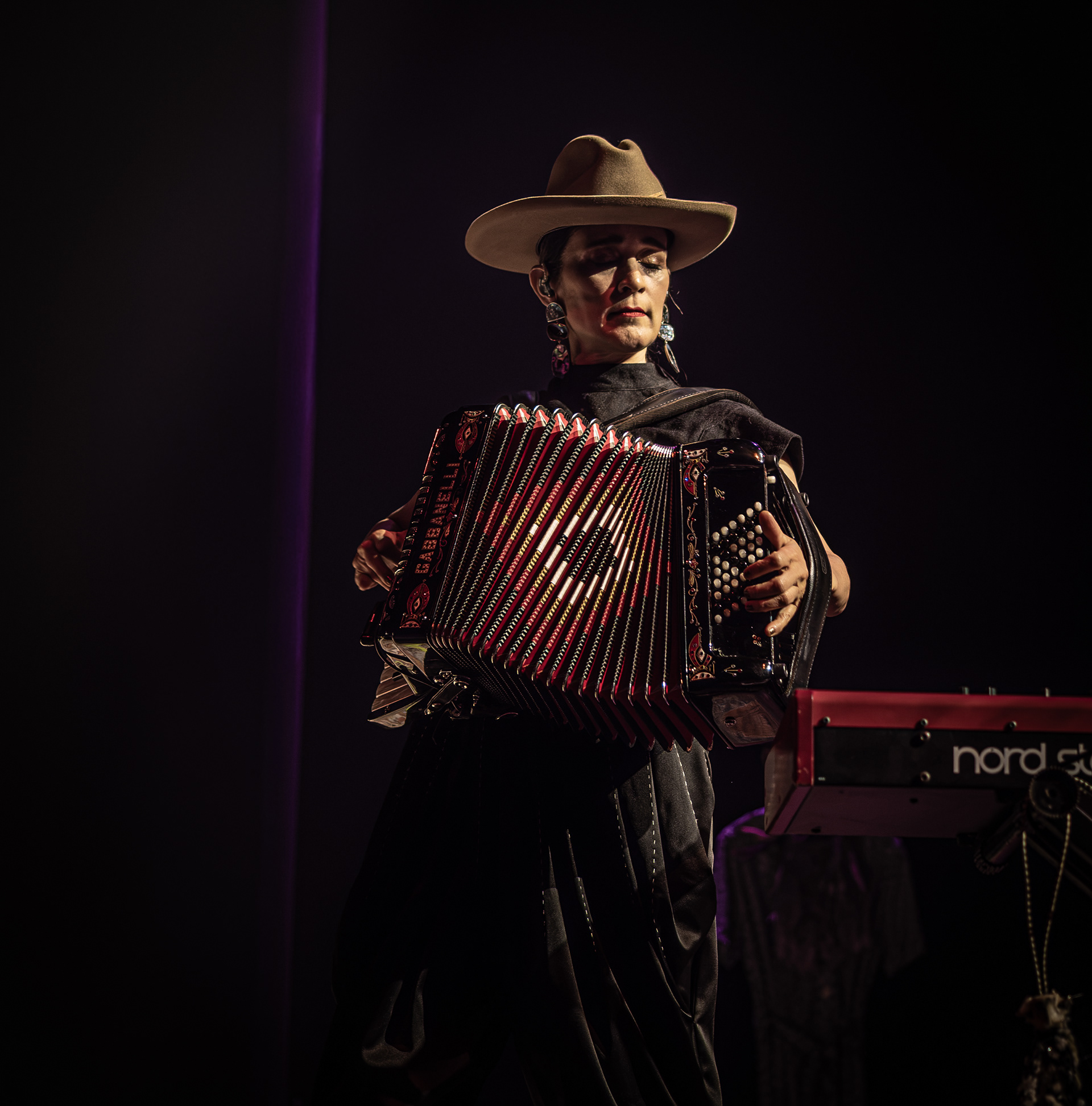


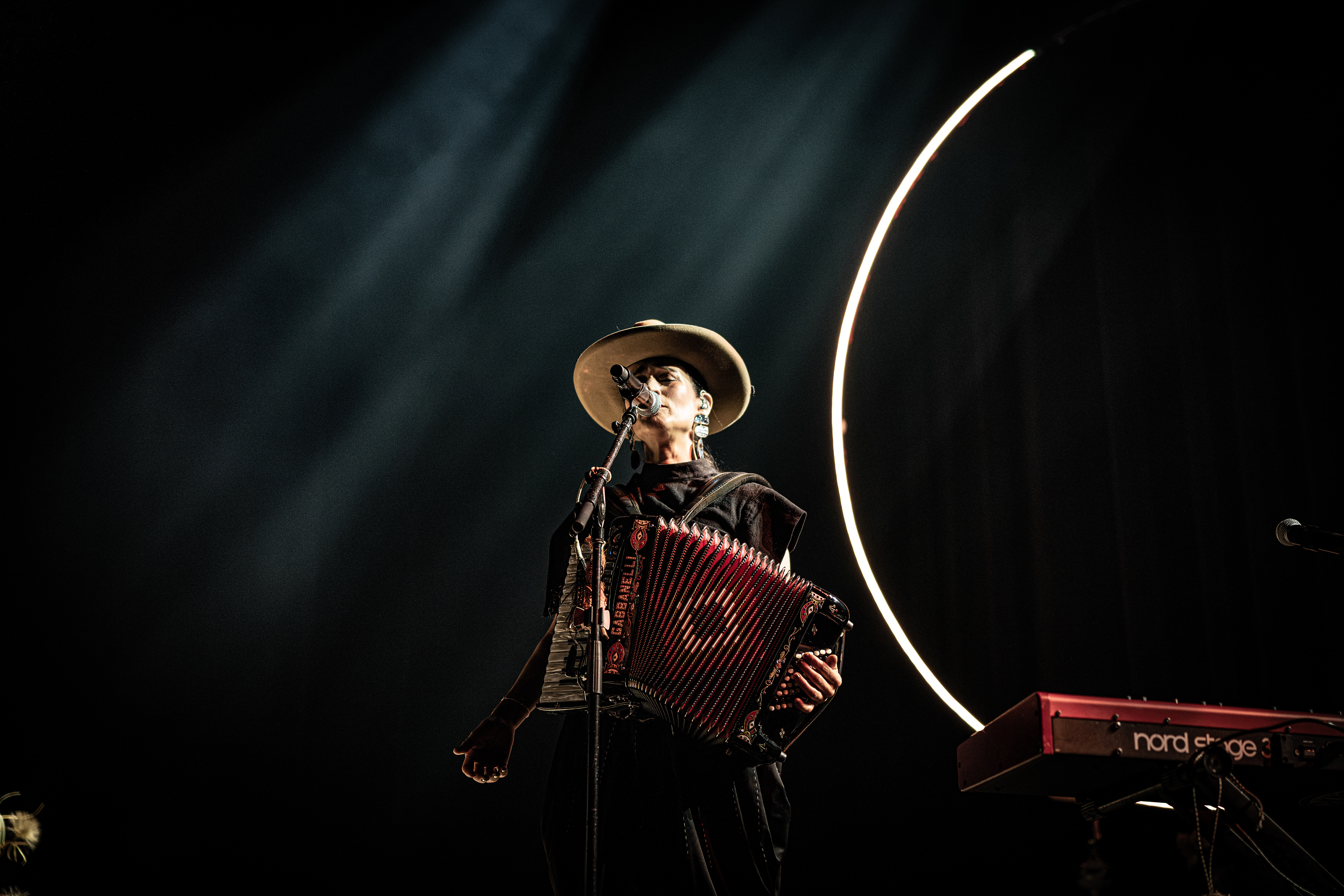



















Before stadiums echoed with her melodies, Julieta Venegas was an introverted keyboard player cutting her teeth in the gritty borderland clubs of Tijuana. Often mistaken for an artist hailing from Spain because of her massive reach across the Hispanic world, Venegas is deeply rooted in Mexico and the US Mexico border. Over three decades, she managed a feat few alternative musicians ever pull off. Dragging a heavy squeeze box into the glare of mainstream pop without shedding an ounce of her edge. Born in California and raised in Tijuana alongside her twin sister, Yvonne, Venegas grew up in a household with little pop culture noise, her parents favored classical rigor. At eight, she took to the piano. By her late teens, classical scales collided head on with ska, post-punk, and the raw border energy of Baja California. She joined the influential Mexican ska-punk outfit Tijuana No!, co writing their legendary anthem "Pobre de Ti" before realizing band democracy stifled what she actually wanted to say. Packing little more than a keyboard and sheer nerve, she moved south to Mexico City in the mid 1990s. Her 1997 debut, Aquí, produced by Gustavo Santaolalla, blindsided Latin alternative critics. Alternative rock at the time was heavy, distorted, and predominantly male. Venegas offered something moody, literary, and unpredictable. When she strapped on a bulky diatonic accordion, an instrument traditionally reserved for polka driven norteño machismo, she wasn't making a gimmick, she was claiming an heirloom of her northern upbringing and turning it inside out. Tracks like "De Mis Pasos" and "Como Sé" established her as an indie auteur. Her sophomore effort, Bueninvento (2000), pushed even deeper into angular guitars and dark introspections, earning critical acclaim and proving she wasn't a one-album wonder. By 2003, many alternative purists expected Venegas to retreat into brooding obscurity. Instead, she took the biggest risk of her career and she simply embraced pure pop hooks. Working with Argentine producer Coti Sorokin and Cachorro López, she released Sí (2003). The record exploded. Songs like "Andar Conmigo" and "Lento" flooded airwaves from Buenos Aires to Madrid. Where other artists lose their identity when chasing pop numbers, Venegas retained her signature quirks like a nasal, warm vocal delivery, self effacing romantic confessions, and that unmistakable accordion heartbeat. She followed it with Limón y Sal in 2006, an album that went multi-platinum and cemented her status as an international household name. The single "Me Voy" was built on an uptempo, buoyant ranchera groove wrapped around a bitter kiss off, and became one of the most recognizable Spanish language tracks of the decade. Rather than chasing formulaic pop hits into the 2010s, Venegas stepped back. Her landmark 2008 MTV Unplugged session remains a masterclass in acoustic arrangement, drawing collaborations with artists ranging from Gustavo Santaolalla to rap pioneer La Mala Rodríguez. In recent years, based in Buenos Aires, she has continued to write with stripped down honesty. From the brooding electro pop textures of Los Momentos (2013) to the reflective warmth of Tu Historia (2022), Venegas operates as an elder stateswoman of Latin indie music. Her surprise 2021 collaboration with Bad Bunny and Tainy on "Lo Siento BB" proved that her bittersweet cadence remains as potent to Gen Z as it was to the MTV generation. Julieta Venegas never fit the typical template of a Latin pop star but built her own lane out of accordion reeds, vulnerable songwriting, and an unshakeable borderland grit.